
Starting injections: the kit you need
A first prescription arrives with the pen and not a great deal else, and the leaflet assumes you already know the rest. Here is the short list. It is shorter than most people expect, and nearly all of it comes from the pharmacy rather than a shop.
What goes in the kit bag
Pen needles. Screw-on, one per injection. Unless the box says otherwise the pen comes without them, and your pharmacy or prescriber supplies them. A 4 mm needle is the usual choice for adults, but length and thickness are your prescriber’s decision, not yours and not ours. Ask for more than you think you need, because a dropped needle still counts as used.
A sharps bin. The yellow box for used needles. Ask your GP for one on prescription or buy one at a pharmacy. Used needles do not go in the household bin. When it is full you seal it, and your council or pharmacy will tell you whether they collect it or where to take it.
Somewhere for the needles in between. This is the gap nobody mentions, and it is the one people fill with a test strip pot, a tissue and a ziplock bag or an old glasses case. The fresh needles need to stay sealed and findable. The used one needs somewhere safe for the hours between the injection and the sharps bin. A case with bays does both.
Swabs, if your team asks for them. Many UK clinics say clean skin is enough and do not ask for alcohol swabs at all, so check before you buy a box of a hundred.
Something to carry the pen in. A zipped pouch or a small wash bag is plenty. If you are travelling somewhere hot, a cool bag or cooling wallet, and follow your pen’s own leaflet on temperature.
If you are starting insulin
Insulin is usually several injections a day, which means several needles a day, and that changes what you need. Four needles is a common day: one with each meal and a long-acting dose at bedtime. The tricky part is not the injection, it is keeping track. By teatime it is hard to remember whether lunch’s dose happened, and in one survey of people who inject insulin more than nine in ten had a memory slip in a month.
Source: Brod et al., 2014, Patient Intelligence.
So add one more thing to the list: a way of seeing what has been done. A written chart works. A phone alarm works, until the phone is in another room. A case that holds the day’s needles shows it without being asked, because a needle with no seal is one that has been used.
If you are starting a weekly pen
One injection a week is easier to do and harder to remember. There is no routine to hang it on, and the question is not “did I take it this morning” but “what day did I take it”. A weekly pen holds four doses, so four needles sees you through one pen.
Two things catch people out. The first is that the pen often comes without needles, so the first week can stall at the pharmacy counter. The second is that there is nowhere obvious to put the used needle, and a month of them in a kitchen drawer is how a household ends up with a needle in the rubbish.
What you probably do not need
A pill organiser. A second sharps bin. An app that charges a subscription. A cool bag, unless you travel or your pen says so. A branded case for the pen itself, when the pouch you already own does the job.
Where NeedleBay fits
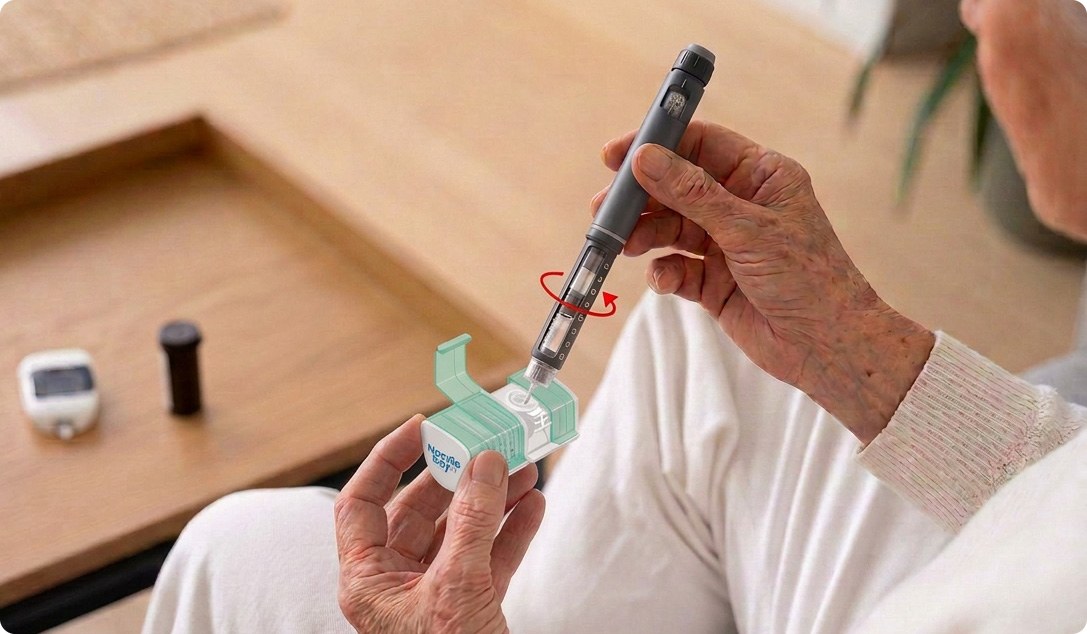
NeedleBay is the third item on the list: a pocket case with four bays that holds fresh pen needles sealed and locks used ones away until you reach a sharps bin, and shows at a glance which doses are done. It is not a sharps bin and does not replace one, it holds the needles rather than the pen, and it contains no medicine. Single £14.95, made in the UK.