
Did I take my insulin? Four insulin reminders compared
Most people who inject insulin have stood in the kitchen and thought: did I take that, or didn't I? You're not alone. In a five-country survey including the UK, over 9 in 10 people with diabetes said they'd had an insulin memory slip in the past month.
Source: Brod et al., 2014, Patient Intelligence.
A missed dose matters, and so does a double one, so people build insulin reminders into their diabetes routine. None suits everyone. Here are the four most common, what each is good at, and where it falls short.
1. Phone alarms and apps
What they do: an alarm goes off at dose time, and some diabetes apps let you log each injection with a tap.
Good at: free or cheap, you already carry your phone, and an app log gives you a history to show your nurse. For fixed-time routines an alarm is hard to beat.
Falls short: an alarm says it's time, not whether you did it. Silence it, get distracted, and the question comes back an hour later. Logging relies on tapping the app every time. Phones run flat, get left in the other room, and small screens are a struggle with poor eyesight.
2. Smart pen caps and connected pens
What they do: a cap or a pen with a built-in memory records the time of each injection, and often the units, and sends it to an app on your phone.
Good at: the most complete record you can get, with no effort at the moment of injection. For clinic reviews, or varying doses across the day, a connected pen is a serious tool.
Falls short: they cost money, sometimes a lot, and may need a prescription or a particular pen. They need charging, an app and a phone that talks to them. For "have I had my breakfast dose?" it can be more technology than the question needs.
3. A written log or chart
What it does: a notebook, a printed chart on the fridge, or a tick on the calendar after each injection.
Good at: nothing to charge, nothing to fail, and a glance tells you where you are. It's easy for a partner or parent to see too.
Falls short: you have to remember to write it, which is the same memory you were worried about. Away from home the chart stays on the fridge. And a tick can't tell "I did it" from "I meant to and got interrupted."
4. A visual check: NeedleBay
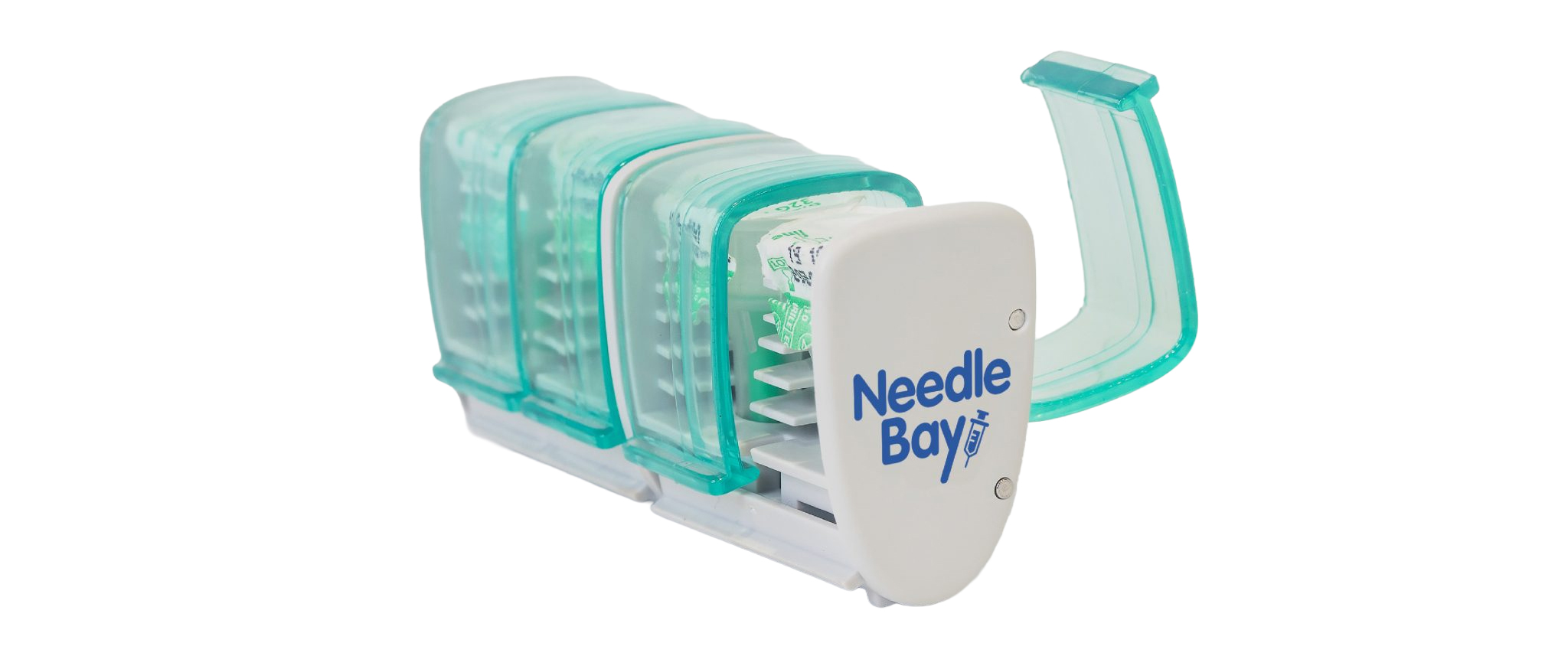
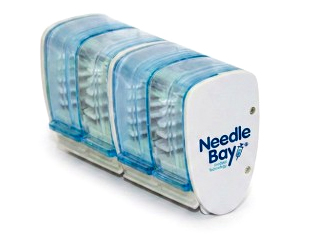
What it does: NeedleBay is a small case with four bays, one for each pen needle in your day. You screw your pen onto a fresh needle to take your dose, then screw the used needle back into its bay. A look through the see-through lids shows which bays hold a used needle and which still have a fresh one in its seal.
Good at: the reminder is the needle itself, so there's nothing to write or tap. It's purely mechanical: no batteries, no charging, no app. The bays can be checked by feel as well as by sight, and the needle stays in its bay while you fit and remove it, so there's no tiny needle to grip. It doubles as insulin pen needle storage, holding fresh and used needles safely until the used ones go into your sharps bin. It works with the pen needles you're already prescribed, including BD Micro-Fine, NovoFine, mylife and GlucoRx.
Falls short: it shows which doses are done, not the time or the units, so it's not a clinic record on its own. It assumes one fresh needle per injection, which is what injection-technique guidance recommends but not what everyone does. It holds four needles, so on more than four injections a day you'd need two.
Which suits you?
Ask yourself what question you actually want answered.
- If it's "is it time?", a phone alarm does the job.
- If it's "how much did I take, and when, for my nurse?", a connected pen is the best record.
- If it's "have I done it?", in the kitchen or at your desk, a visual check answers in a glance: a tick on a chart if you're disciplined about it, or a used needle sitting in its NeedleBay if you'd rather the needle did the remembering.
Many people use two together: a connected pen or app for the record, and a visual check for the daily "did I or didn't I?". Whatever you choose, make it part of your diabetes routine. The reminders that work are the ones you don't have to think about.
Frequently asked questions
What's the best insulin reminder if I have poor eyesight?
One you can use by touch. Phone screens and small app text are a strain, so a tactile check suits better. NeedleBay's lids click shut, the lift tabs can be found by feel, and a used needle has no seal, so you can tell which bays are done without reading anything.
Can a reminder help prevent double-dosing?
Yes, if it shows whether a dose is done rather than just that it's due: a log filled in straight away, a connected pen's record, or a used needle back in its bay. An alarm alone can't tell whether you acted on it.
Do I need a smart pen to keep track of my insulin?
No. A smart pen gives the fullest record and is worth asking your diabetes team about. For the everyday "have I taken it?" question, a chart or a visual check like NeedleBay does the job with nothing to charge.
How does NeedleBay fit into a diabetes routine?
Load four fresh needles in the morning, one per injection. Each used one goes back into its bay. By bedtime the bays tell the story, and you reload for tomorrow. The case goes with you, so it works at home, at work and away.